
By Doss Dennison
Over the years, Fort O’Brien School’s science and math teacher, Tom Manship, has developed a long-term enrichment relationship with Downeast Institute (DEI) on Great Wass Island, Beals, for the school’s fifth through eighth-grade students.
For Manship’s fifth graders, the school’s Nov. 18 field trip was their first of what will be several visits over the course of the school year. Students in grades six through eight will build on what they’ve learned by visiting DEI in the previous school years.
Sixth through eighth-grade students in Doss Denison’s history and social studies class and teaching principal Susan Almendinger's English classes also joined Manship’s class on the field trip.
Last week, the students broke into two groups to participate in two different labs. Once a group had completed their tasks, they switched places with the other group. Group 1 was Mr. Manship’s fifth graders, and Group 2 was Mrs. Almendinger’s seventh and eighth graders.
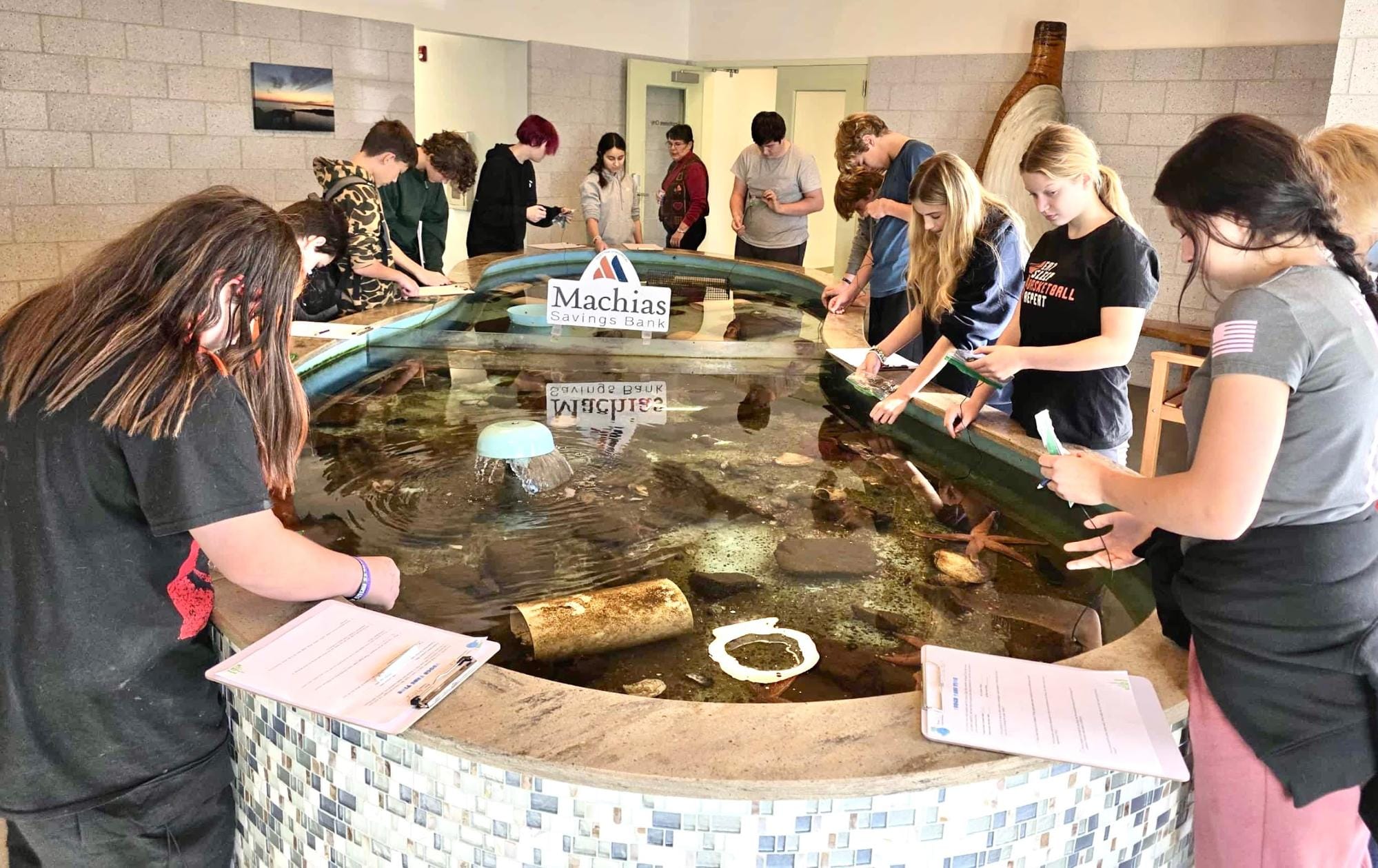
Group 1 began their day in the foyer around DEI’s touch tank. The tank contained one blue lobster, which, according to DEI’s staff, is a one-in-a-million rarity. The tank has an even rarer cotton candy-colored lobster, which occurs only about once in a hundred million times in nature. The touch tank has two separate pools, with one side containing these rare lobsters and the other side containing starfish.
The students at the touch tank lab learned how to properly measure and record the temperature and pH level of each side of the tank. The pH scale measures how acidic or basic (alkaline) a substance is.
To record the temperature, each student was given a digital thermometer with a submersible probe. To record the pH levels, they were given pH strips to submerge into the water and then match the color on the strip to a pH chart. After completing their tasks, they were allowed to touch the creatures — except for the cotton candy lobster — in the tank.
While students from away might have possibly freaked out picking up live lobsters or a squishy starfish bigger than their hand, that was not these kids, many of whom come from lobster fishing families in Machiasport. The FOB students handled these creatures like Downeast pros.
While Group 1 explored the touch tank, Group 2 met in one of DEI’s actual labs, where they learned about another vital Downeast fishery — scallops — before swapping off. The students’ task involved measuring the length and mass of baby scallops. After grabbing a petri dish, they were to go to the proper tank and select a scallop to measure. These were baby scallops, which were about the size of a quarter at most.
The first step in the process was to measure the length of the scallop with a micrometer. The length recorded in millimeters was determined by measuring from the middle of their hinge to the apex of the shell. To record the mass, each student was given a digital scale that measured the mass of the scallop in grams.
When the students finished recording their data at each station, they were given worksheets to take back to FOB with them. The worksheets included such questions as:
• What might make some lobsters turn out different colors?
• Which animal in the tank do you think has the most interesting survival strategy adaptation?
• Some animals prefer colder, saltier water. What might they do if the water around them changed?
• Imagine designing a new touch tank for visitors. Which animals would you include and why?
• What’s one new thing you noticed or learned today that you never paid attention to before?
The students also learned that the population of empty shells along Maine’s rocky coast is declining, due to human collection. Hermit crabs rely on these empty shells to protect themselves. Scientists are noticing that crabs, which are struggling to find suitable shells, are beginning to use small pieces of debris. The students were presented with the question, “What are some practical ways humans could help maintain a healthy hermit crab population in this area?”
Once again, the short field trip proved to be educational, rewarding, and successful. The students will return to DEI again to follow up with additional lab tests.
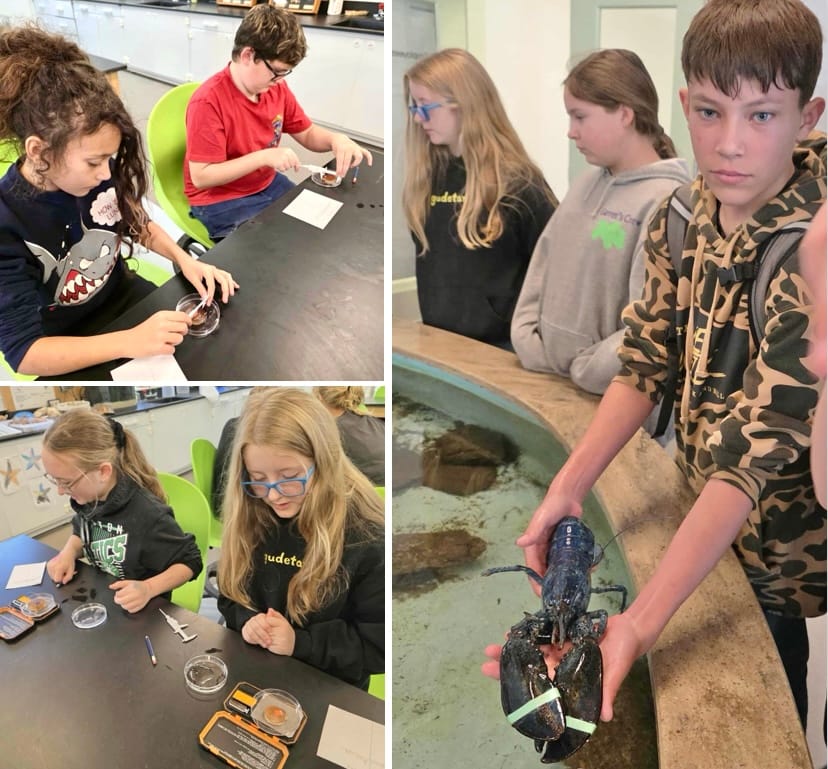
Mari and Ryker (top left) measuring the length of their baby scallops. Peyton and Lou (bottom left) measuring the mass of their baby scallops. Carter holds a one-in-a-million blue lobster. (Doss Dennison photos)
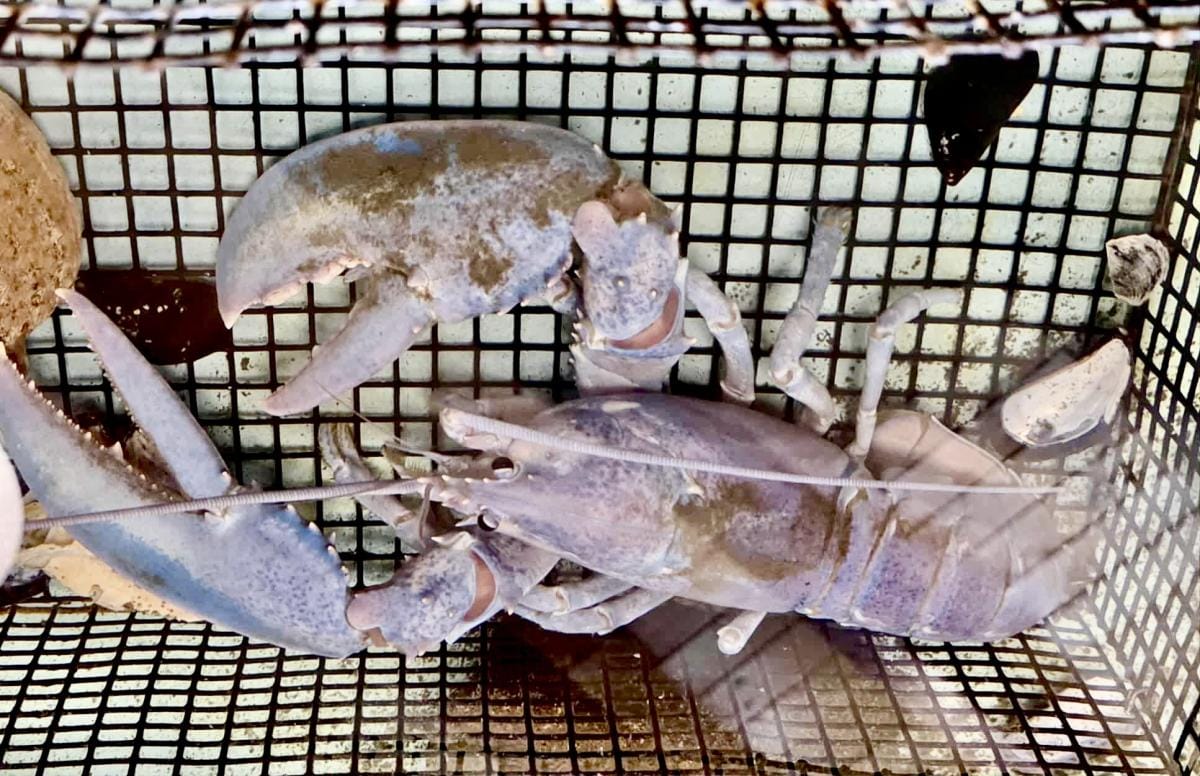
A one-in-a-hundred-million cotton candy lobster. (Doss Denison photo)
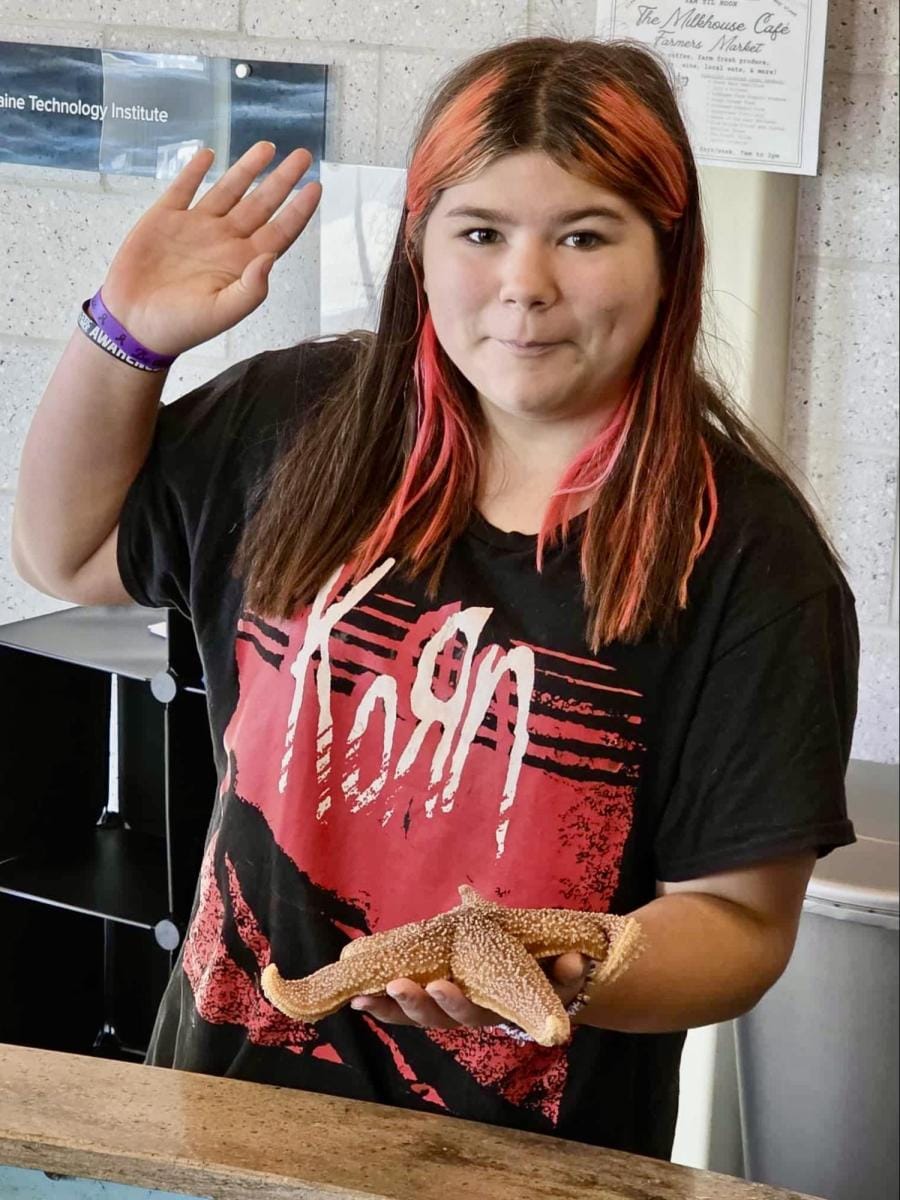
Hadlee holding a starfish from the touch tank. (Doss Dennison photo)