

By Paul Sylvain
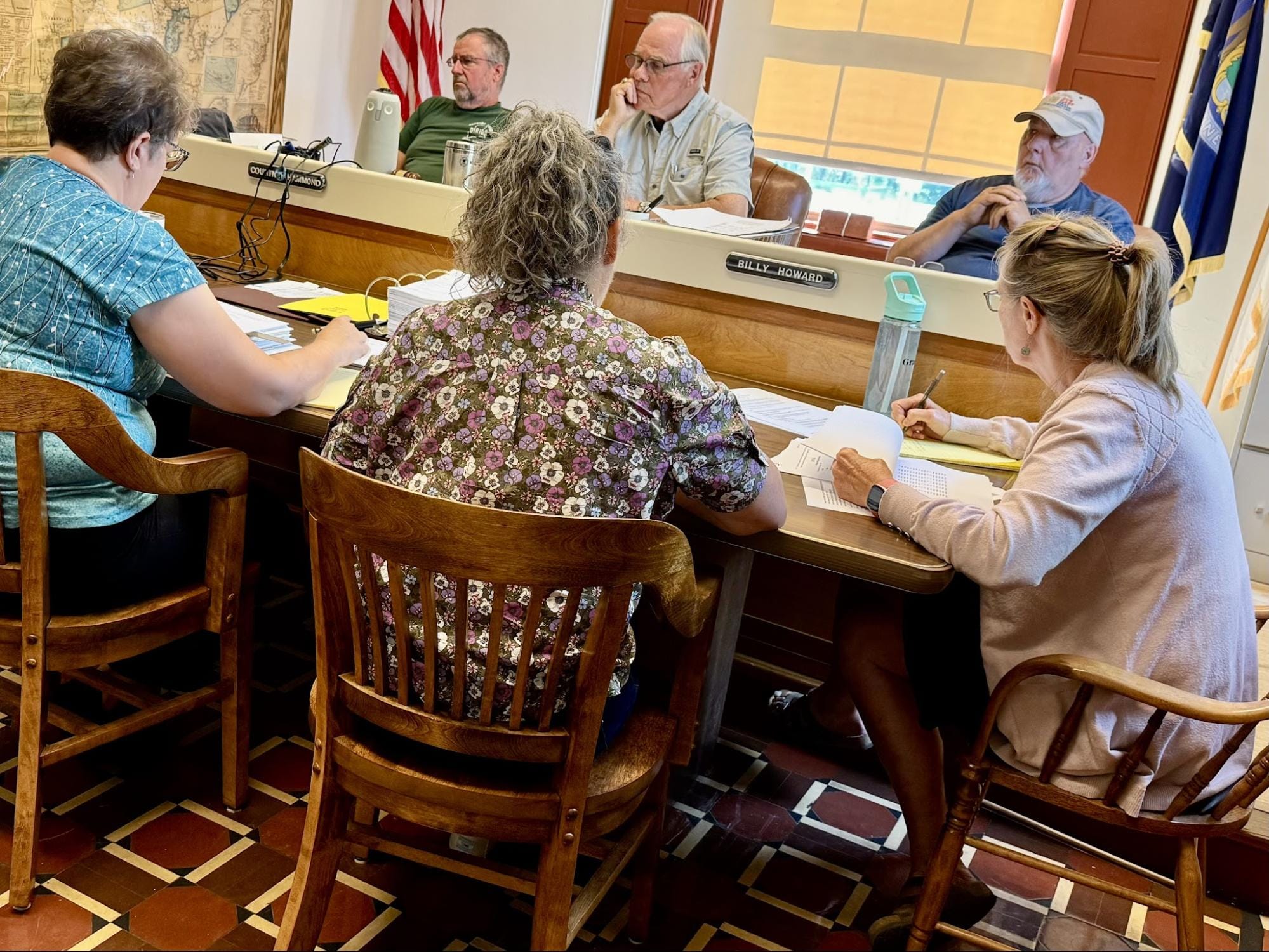
In spite of recent efforts by District 1 County Commissioner Billy Howard to enact a freeze on overtime spending at the Washington County Sheriff’s Office, Howard once again came up empty-handed at the Sept. 10 commissioners meeting.
Sheriff Barry Curtis is responsible for overseeing the budgets of all three branches in his department: patrol deputies, the county jail, and emergency dispatching at the Regional Communication Center (RCC). Together, they account for the lion’s share of the county’s massive annual budget.
Recent reports to the commissioners by the county’s finance department reflect that overtime lines for the jail and for law enforcement patrols by sheriff’s deputies have already been overspent, though, as the department noted at Thursday’s meeting, revenues were already outpacing last year as well.
Howard, who has lobbied in favor of freezing overtime spending at the Sheriff’s Office during two previous commissioners meetings, again pleaded his case last week, telling fellow commissioners Courtney Hammond and Chairman David Burns, “I can’t, in good conscience, sit here and overspend our lines. Now that we know our audits, and we know our budget, and we know our numbers are accurate, I won’t sit here and purposely run over our budget.” Referring to last year’s budget crisis, Howard stressed, “That’s what got us in the mess before.”
County Finance Director Jenny Windsor told commissioners that $220,000 was budgeted for overtime for patrol shifts by deputies at the Sheriff’s Office for the current fiscal year. She reported that, as of Aug. 31, the SO had overspent its overtime budget line by $13,136, for a total of $233,136, with three more months remaining before the Dec. 31 end of the fiscal year.
It is even worse at the county jail, where $178,000 was budgeted for overtime for corrections officer shifts at the jail for the current year. As of Aug. 31, the jail has overspent its overtime budget to the tune of $40,549, for a total $218,549.
The ensuing discussion became intense and heated at one point after Washington County Sheriff’s Chief Deputy Mike Crabtree tried to explain, “We have obligations we need to meet. We do the best we can. That’s what we said at the end of last year. We’ll do the best we can to stay within that [overtime] line.”
Crabtree asked commissioners, “So what am I supposed to do at 2 in the morning when we need somebody?” Chairman Burns, who is a retired Maine State Police trooper and detective, assured Crabtree he understood the need to respond to emergencies, but believes the department could restructure its shifts to reduce overtime costs — something both he and Crabtree acknowledged they differed sharply on.
Meanwhile, Howard argued that he has been at the receiving end of citizen complaints regarding overtime costs at the county. RCC Deputy Director Josh Rolfe immediately challenged Howard, saying, “You always say that, but you can’t prove it.” The exchange between Rolfe and Howard prompted Burns to order them both to cease.
Howard then tried to compare managing a departmental budget to living within a household budget. His point was that if there is no money left to buy something in a household budget, you don’t buy it. However, Howard’s argument fell flat with the county’s Jail Administrator Rich Rolfe.
As the jail administrator has noted several times in recent meetings, the county is statutorily required by state mandates — many of them unfunded by the state — to provide certain services and medical care to inmates at the jail. At one recent commissioners meeting, Rolfe told the commissioners that those mandates include working with a licensed nutritionist who has to review and approve meals served to the jail’s inmate population.
“It’s not as simple as we’re going to run this as a household budget,” Crabtree told Howard. “We do our best to stay within them. We save money every chance we can.”
Crabtree pointed out that while the overtime lines have been overspent, the Sheriff’s Office has identified about $70,000 from other budget lines that have not been spent and could be used to cover overages in overtime spending.
The discussion on freezing overtime ended without a motion or a vote taken to freeze overtime.